
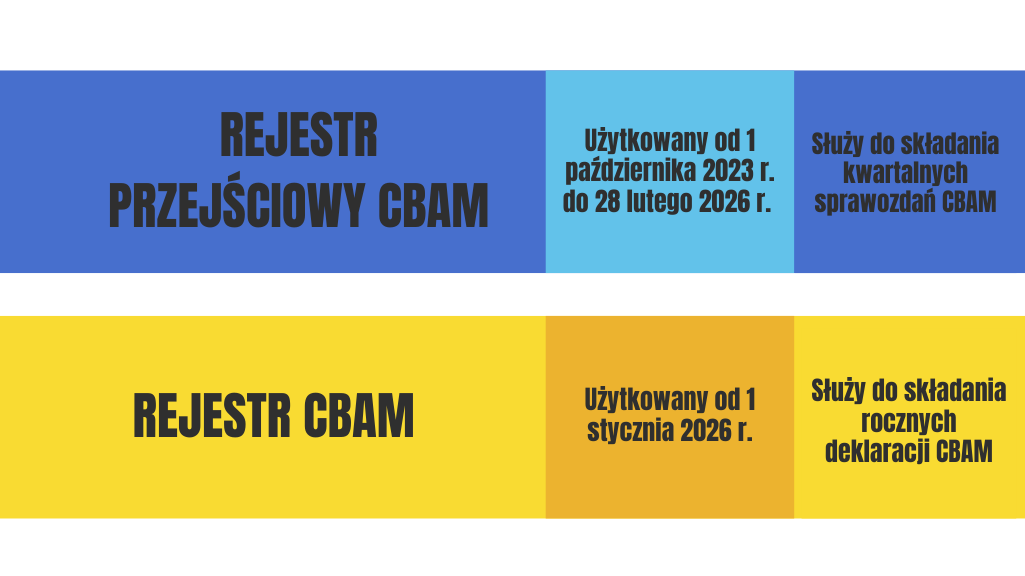
The European Union acted like clockwork. A year before the start of the CBAM target period, the Commission published a regulation describing the rules for the functioning of the CBAM registry. It is an ICT system that will enable the exchange of key information between importers and control authorities. This is where importers will submit their first annual CBAM declaration. The CBAM registry will be relevant from January 1, 2026, and will replace the transitional CBAM registry. The content of the regulation on the CBAM registry was announced on December 18, 2024.
How does the CBAM registry differ from the transitional CBAM registry? The main differences are:
In order to log in to the CBAM registry, the EU's Single User Management and Digital Signature System (UUM&DS) will be used. In addition, Member States may incorporate a national user authentication system into the process of accessing the registry. In Poland, during the transition period, this role is performed by the Electronic Tax and Customs Services Platform (PUESC). It is likely that the same platform will be used for logging in during the CBAM target period. Businesses are hoping that proven solutions will streamline the user authentication process and navigation within the CBAM registry. When the first CBAM platform—the transitional registry—was launched, there were many technical problems.
The importer will be able to grant access to their CBAM registry to a person acting on their behalf. That person will be able to perform the importer's CBAM obligations, such as annual reporting or obtaining emissions data from the database intended for producers. However, the Commission emphasizes that the importer is always responsible for fulfilling the obligations under the CBAM regulations.
The importer's compliance with CBAM obligations will be verified through continuous monitoring and exchange of information between customs authorities, Member State authorities, and the European Commission.
The CBAM registry will contain, among other things:
The European Commission will also use this register to analyze the risk of circumvention by importers. The control system is intended to be comprehensive and effective, so do not ignore the CBAM regulations.
If you need help fulfilling your obligations, please contact us. Our CBAM team has already helped dozens of importers identify CBAM goods, submit reports, and contact manufacturers.
Below is a link to the Official Journal of the European Union with the regulation in question:
Commission Implementing Regulation (EU) 2024/3210 of December 18, 2024.

biuro@echoeg.com | +48 570 405 973
